
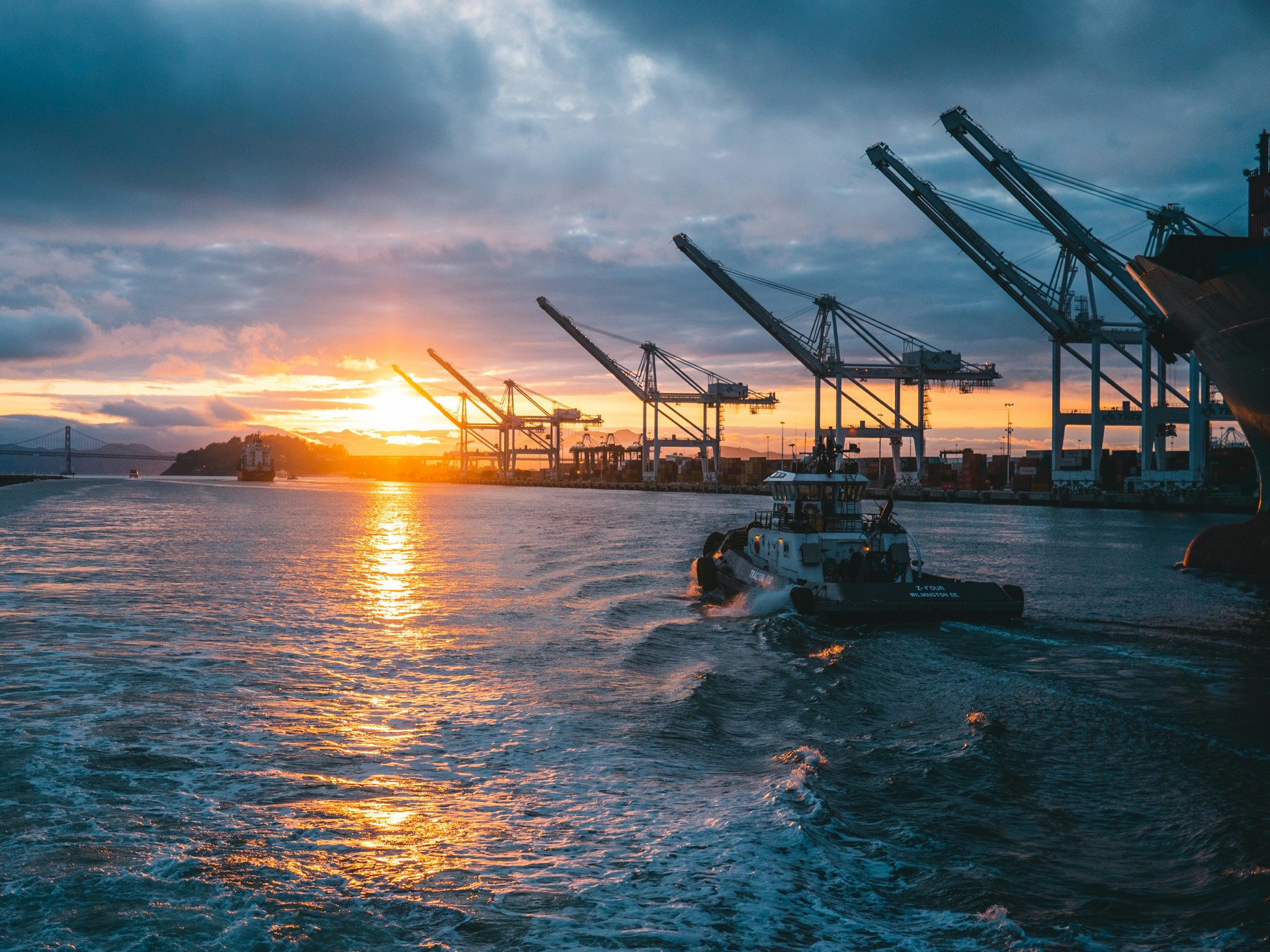
Operational control on the China – Port of Manzanillo – Bajío Region corridor
We don't operate every corridor in the world. We operate this one. With the level of detail that only comes from accumulated knowledge of every operation, every customs process, every shipping line, and every kilometer between the port and the Bajío.
The most strategic corridor for Bajío industry
The Port of Manzanillo handles more than 40% of Mexico's container traffic. For manufacturing, auto parts, electronics, retail, and maquila companies in the Bajío Region, it's the main entry point for imports from Asia, especially China. Less ground-transit time, lower transfer costs, and a route Sama Forwarding knows inside and out.
Operating this corridor isn't about booking a freight and waiting. It requires coordinating three fronts simultaneously: origin in China, ocean transit, and customs clearance in Manzanillo. An error at any one of these three points can turn into days of delay, unexpected costs, and customs incidents. Operational control is the answer to that complexity.
A generic freight forwarder operates many corridors and knows none of them in depth. At Sama Forwarding, we've operated this corridor for over 10 years. That means we know which shipping lines are reliable on this route, the real clearance times in Manzanillo, the friction points in customs, and the most efficient ground routes to every locality in the Bajío. We don't improvise. We build, shipment by shipment.
+40% of Mexico's container traffic passes through Manzanillo.
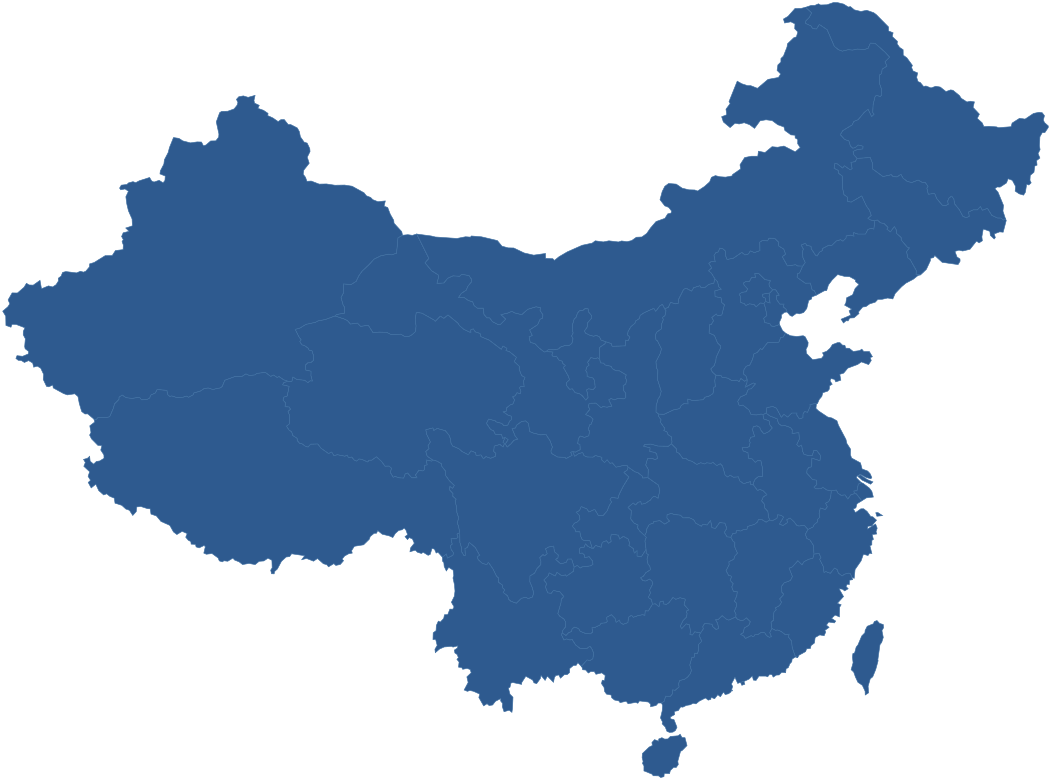
 CHINA
CHINA MEXICO
Origin port — China
We coordinate bookings with tier-1 shipping lines and track your cargo from China through confirmed departure. Because operational control doesn't start at the port: it starts at origin. (Shanghai, Qingdao, Xiamen, Hong Kong, Ningbo, Shenzhen)
Ocean transit
21 days average on the direct route. Active monitoring with alerts for deviations or delays. We don't wait for you to ask — we keep you informed.
Port of Manzanillo
Active operational presence. Ground-transfer coordination from the port.
Ground route to the Bajío
We coordinate ground transport with units dedicated to Sama Forwarding. We don't outsource this stage to a carrier disconnected from the operation.
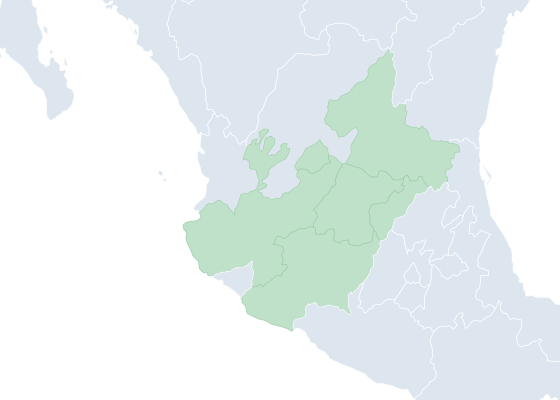
Final destination — Bajío Region
For us, an operation doesn't end at the port. It ends when the cargo is correctly delivered, the documentation is complete, and the client has full visibility of the operational close. (Guadalajara, Guanajuato, Querétaro, Aguascalientes, San Luis Potosí, Michoacán, Jalisco)
- 01 — Origin port — China: We coordinate bookings with tier-1 shipping lines and track your cargo from China through confirmed departure. Because operational control doesn't start at the port: it starts at origin. (Shanghai, Qingdao, Xiamen, Hong Kong, Ningbo, Shenzhen)
- 02 — Ocean transit: 21 days average on the direct route. Active monitoring with alerts for deviations or delays. We don't wait for you to ask — we keep you informed.
- 03 — Port of Manzanillo: Active operational presence. Ground-transfer coordination from the port.
- 04 — Ground route to the Bajío: We coordinate ground transport with units dedicated to Sama Forwarding. We don't outsource this stage to a carrier disconnected from the operation.
- 05 — Final destination — Bajío Region: For us, an operation doesn't end at the port. It ends when the cargo is correctly delivered, the documentation is complete, and the client has full visibility of the operational close. (Guadalajara, Guanajuato, Querétaro, Aguascalientes, San Luis Potosí, Michoacán, Jalisco)
Corridor timelines, and what makes them happen
The first question any Logistics Manager asks is: how long does it take? The right answer is a number paired with the factors that affect it and how they're managed. That's exactly what separates an operator who promises timelines from one who delivers them.
Advance booking with tier-1 shipping lines. Advance space management during peak season.
Selection of shipping lines with direct routes. Active monitoring. Alerts for deviations.
Documentation prepared before arrival. Clearance started same-day.
Correct classification from origin. Complete documentation.
Dedicated units. Immediate coordination post-release.
Operational control at every stage reduces variability and protects planned timelines.
Corridor risks and how we manage them
Operating the China–Manzanillo–Bajío corridor requires managing risk on three simultaneous fronts: origin, transit, and destination. At each point there are variables that can turn into days of delay, unexpected costs, or customs incidents. Operational control isn't a concept — it's the set of processes that keeps those variables from becoming problems for your operation.
Tariff classification error
An incorrect tariff classification in the origin documentation can result in the cargo being held at customs, fines, release delays of several days, and unbudgeted additional costs.
Review of the correct tariff code before issuing origin documents. A team with up-to-date knowledge of the tariff schedule and the non-tariff regulations applicable to the cargo type.
Release within normal timelines, with no customs surprises and no additional costs from classification errors that the client has to absorb.
Lack of visibility during ocean transit
Without active tracking, the importer doesn't know for certain when their cargo will arrive or whether there were deviations, carrier changes, or route delays. That uncertainty creates problems for inventory and production planning.
Active monitoring of cargo status during transit. Proactive communication to the client on any change in the itinerary. We don't wait for the client to ask — Sama Forwarding informs.
Inventory planning with real arrival data. The ability to anticipate adjustments in the production chain if there are deviations. No uncertainty in the final transit leg.
Congestion and delays at Port Manzanillo
The Port of Manzanillo operates with high congestion during import seasons. Without advance coordination, cargo can accumulate days of delay waiting for clearance, generating unbudgeted storage costs.
Documentation prepared before the cargo arrives at the port. Clearance process started the same day of arrival. Advance coordination with customs and the port agent to reduce waiting times.
Reduced port dwell time. Storage cost control. Ground transfer coordinated with no post-release waiting.
Break in the ground custody chain
When ground transport is contracted separately or with an operator disconnected from the customs operation, blind spots appear in traceability and there's a risk of delays, damage, or unreported deviations.
Ground transport coordinated with units dedicated to Sama Forwarding. This stage is not outsourced to a third party without operational coordination. Continuous traceability from port departure to final delivery.
End-to-end operation under a single operational owner. Full traceability in the ground leg. Documented delivery at the client's plant or warehouse.
Non-compliance with non-tariff regulations
Certain cargo types require permits, certifications, or specific regulations (COFEPRIS, SEMARNAT, SAGARPA, NOMs, etc.) that, if not managed correctly from origin, can result in the cargo being held or rejected at customs.
Advance review of the regulations applicable to the cargo type and country of origin. Advance management of permits and certifications when applicable. A team up to date on foreign-trade regulations.
Arrival at the port with complete, compliant documentation. No holds for regulatory non-compliance. Legal certainty in every operation.
Frequently asked questions — China–Port of Manzanillo–Bajío Region corridor
How long does ocean transit from China to Port Manzanillo take?
Standard ocean transit from the main Chinese ports (Shanghai, Qingdao, Xiamen, Hong Kong, Ningbo, Shenzhen) to the Port of Manzanillo is approximately 21 days on a direct route. The exact time depends on the origin port, the selected shipping line, and the service type (direct route or transshipment). At Sama Forwarding, we actively monitor transit and communicate any variation before it impacts your inventory planning.
What's the difference between FCL and LCL for the China–Mexico corridor?
FCL (Full Container Load) is the service where you book a full container exclusively for your cargo. It's more cost-effective per unit when volume justifies it (generally from 15–20 CBM) and offers greater control over timelines. LCL (Less than Container Load) groups your cargo with other importers' in the same container — the right option for smaller volumes, though it involves additional consolidation time and greater clearance complexity. At Sama Forwarding, we assess which option is best for each operation based on volume, frequency, and required timelines.
What documents do I need to import from China to Mexico?
For a standard import from China to the Port of Manzanillo you need: Bill of Lading (issued by the shipping line), Commercial Invoice (from the Chinese supplier), Packing List, Certificate of Origin (when applicable for tariff preferences), and cargo-specific documentation (COFEPRIS, SAGARPA, SEMARNAT, NOM permits, etc.). At Sama Forwarding, we review documentation before shipment to avoid customs holds due to incomplete or incorrect paperwork.
How much does it cost to import a container from China to the Bajío?
The cost of importing from China to the Bajío depends on multiple variables: cargo volume and type, origin port in China, shipping line and service type (FCL/LCL), import season, merchandise value (which determines foreign-trade taxes), and final destination in the Bajío. At Sama Forwarding we don't publish generic rates because every operation is different — what we do offer is a free logistics diagnostic where we analyze your operation and present a proposal with all costs involved, no surprises.
What advantages does the Port of Manzanillo offer over other entry ports?
The Port of Manzanillo offers three key advantages for Bajío importers:
- Geographic position: the closest port to the Bajío Region by ground distance from the Pacific coast, which reduces final-transfer times and costs.
- Operating volume: it handles more than 40% of Mexico's container traffic, meaning higher frequency of shipping services from Asia.
- Infrastructure: capacity to handle large cargo volumes with competitive clearance times when documentation is in order.
What is a customs broker and why is it key on this corridor?
The customs broker is the professional authorized by Mexico's tax authority (SAT) to represent the importer before customs during the clearance process. On the China–Manzanillo corridor, the customs broker is critical because they classify the merchandise under the correct tariff code, calculate and declare foreign-trade taxes, manage compliance with applicable non-tariff regulations, and coordinate cargo release with customs.
Can I track my cargo during transit from China?
Yes. At Sama Forwarding we manage active tracking of your cargo from departure in China through delivery at your plant or warehouse. It's not just a shipping-line tracking link — it's operational tracking with proactive communication on any itinerary change, deviation, or delay. The client receives updates without needing to ask. If there's a transit incident, we tell you before it impacts your planning.
Which industries in the Bajío import via the China–Manzanillo corridor?
The China–Manzanillo–Bajío corridor is used primarily by companies in manufacturing, auto parts, electronics, retail, construction, and maquila. The Bajío Region is home to major industrial plants that import components, raw materials, and capital goods from China. At Sama Forwarding we have experience operating the corridor for all these industries, which lets us understand each sector's specific needs in terms of tariff classification, regulations, and delivery timelines.
What happens if my cargo has customs problems?
A customs incident can be: physical inspection of the merchandise, precautionary embargo, documentation observations, or a hold due to non-tariff regulations. Most incidents are resolved at no additional cost to the client when documentation was prepared correctly from origin. For cases requiring additional handling, the client is informed immediately with a clear action plan.
Which shipping lines does Sama Forwarding work with on the China–Mexico corridor?
We operate the China–Manzanillo corridor with CMA CGM, Hapag Lloyd, Maersk, Cosco, among others.
Do you operate on the China–Manzanillo–Bajío corridor?
If your company imports from China or is considering it, we'll analyze your current operation on the corridor at no cost and no obligation. We'll show you precisely where the improvement opportunities are and how operational control can directly impact your supply chain.